
Blog
FUE vs DHI: Which Hair Transplant Technique Is Right for You?
Compare FUE and DHI hair transplant methods — extraction, implantation, recovery, density, and ideal candidates.
21 April 2026 · 8 min read
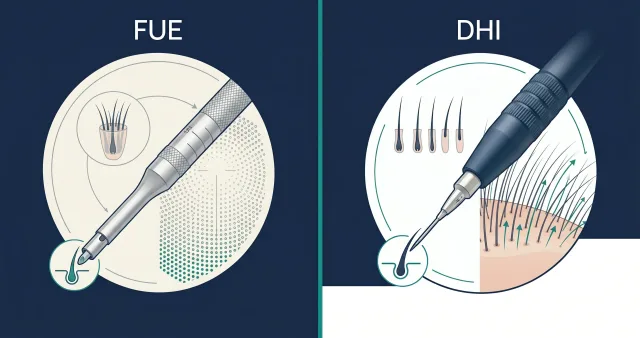
FUE and DHI are both follicular unit procedures — grafts are taken from the donor area at the back and sides of the head. The difference is how those grafts are placed into the thinning zones.
FUE (Follicular Unit Extraction)
Classic FUE follows three steps: extract grafts → open channels in the recipient area → implant grafts with forceps or implanters. It is flexible for large sessions and allows precise channel depth planning.
- Best for: large areas, crown work, staged mega-sessions
- Tools: micro punch extraction + blade or needle channels
- Learning curve: team experience matters at every step
DHI (Direct Hair Implantation)
DHI uses Choi implanter pens to place grafts directly without pre-made incisions in the traditional sequence. This can improve angle control and is popular for hairlines and no-shave cases.
- Best for: hairline design, temple work, selective density
- Tools: Choi pen direct implantation
- Often combined with FUE extraction
Quick comparison
- Scarring: both leave dot scars in donor — similar
- Session size: FUE often scales larger per day
- Density control: DHI strong for frontal refinement
- Cost: DHI may cost more due to placement time
- Recovery: broadly similar timelines
Many patients are candidates for both. We recommend after reviewing your photos — not before. See our dedicated comparison page or book a free consultation.
Ready for a personal assessment?